

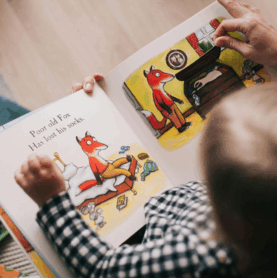
Early literacy refers to the skills, knowledge, and attitudes that form the foundation for reading and writing. It begins long before children start formal schooling. In fact, it develops through everyday interactions such as talking, singing, playing, and being read to.
Emergent literacy, as it is also referred to, is not just about learning to read- it’s about building the communication, thinking, and emotional tools that every child needs in order to thrive. Investing in early literacy means investing in the whole child- their voice, their mind, and their heart.
Early literacy is extremely significant when it comes to language development, social-emotional development, and cognitive growth.
Additionally, early literacy nurtures vocabulary, listening skills, and understanding of language structure. When children hear stories, they learn new words, sentence patterns, and how language is used to communicate ideas. In fact, talking and reading aloud exposes children to richer language than they typically hear in a casual conversation.
Early literacy has a positive effect on the social-emotional development of children as well. Shared reading and literacy activities foster bonding between children, child care providers, and caregivers, therefore establishing emotional security. Research has shown that stories help children understand emotions, empathize with others, and navigate social situations.
Regarding cognitive growth, reading and storytelling stimulate critical thinking, memory, and problem-solving. These interactions strengthen brain connections, supporting overall cognitive development during ages birth to 5 – the most crucial period of brain growth. Our Cognitive Development in Early Childhood blog highlights the different stages of development at each age, as well as offers engaging ways to support your child’s development.
What Is Early Literacy and Why Does It Matter?
Early literacy in children is the foundation of reading and writing that begins developing from birth and grows through interactions with caregivers and the world around them. It’s much more than just recognizing the alphabet. Rather, early literacy is a broad foundation of skills that support a child’s ability to eventually read, write, and communicate effectively. Through early literacy, children become confident communicators, curious thinkers, and lifelong learners. When children build these skills early, they are more likely to enter school prepared and ready to learn, better equipped to develop reading fluency and comprehension, and more likely to experience academic success.
Five Core Early Literacy Areas
- Sound Awareness – Hearing and playing with sounds in words (e.g., rhymes, syllables, phonemes)
- Alphabet Knowledge – Recognizing letter names and shapes, and beginning to connect them to sounds
- Print Awareness – Understanding how books and written language work (e.g., direction of text, word spacing)
- Language Development – Building vocabulary, asking questions, and holding conversations
- Early Writing – Drawing or writing marks that represent language (e.g., scribbles, letter-like forms)
According to The “High Five” Early Literacy Skills by Research Associate Lynne Hall, “these five concepts not only promote academic achievement but also nurture a lifelong love for language and learning. By developing these fundamental concepts, we empower our youngest learners to become confident, capable, and enthusiastic readers and writers.”
Together, these five skills prepare children for reading success by helping them understand how language works, how stories are structured, and how to decode and make meaning from print.
Creative Early Literacy Activities to Try
Below are some fun, creative, and low-cost early literacy activities you can try at home, in the classroom, or during community programs. These activities make reading and writing more engaging, hands-on, and developmentally enriching.

Sensory & Motor Activities – Activities such as using Salt trays or playdough letter formation to practice letter writing, along with pillow jumping with letter cards supports fine motor skills and letter recognition.
Arts & Storytelling – Puppet shows, drawing story endings, magic letter painting each builds narrative skills, supports creativity, and oral language.
Games & Language Play – Alphabet Kaboom, I Spy, clapping syllables and rhyming songs reinforce sound awareness and listening comprehension.
Everyday Literacy Moments – Labeling household items, narrating during routines, nature walk descriptions can help promote vocabulary and real-world connections.
As you can see, these activities encourage children to explore language in hands-on, imaginative ways that deepen their understanding of sounds, words, and stories. Creative literacy activities also strengthen fine motor skills, build vocabulary, and nurture self-expression. Most importantly, it helps children develop a positive, joyful connection to reading and communication, setting the stage for lifelong learning.
Daily Habits to Include
Daily habits play a crucial role in building early literacy. When early literacy becomes a regular part of a child’s day, it not only boosts their confidence, but also lays the foundation for academic and personal success. Here are some early literacy habits you can incorporate with your child:
Read together at least 10 minutes daily – This activity may seem simple, but it has a profound impact on their development. Those few minutes can help lay the groundwork for successful reading and learning. More importantly, it creates a warm, shared experience that strengthens the bond between you and your child. Consistent daily reading sets the stage for a lifelong love of books- and it starts with just a few minutes of connection.
Ask open-ended questions – When you ask open-ended questions like “What do you think will happen next?” or “Why do you think the character felt that way?”, you invite your child to express their thoughts, make predictions, and explore ideas more deeply. These conversations help build vocabulary and comprehension.
Encourage kids to tell stories or act them out – By inviting your child to retell stories on their or act them out with toys or props, you’re not only instilling comprehension and confidence in them, but also helping build their imagination. These playful moments also strengthen memory, sequencing skills, and the ability to see different perspectives. It’s a great way to help your child grow as a thinker, speaker, and creator.
Rotate books and games to keep learning fresh – It’s important to rotate books and literacy games regularly. Doing so provides new stories, diverse characters, and different types of storytelling, while rotating games keeps the experience fun and interactive. This variety keeps children curious and motivated and supports different learning styles.
Whether you’re at home, in the car, at the store, or on a walk, any moment can be a literacy moment! Everyday moments can be powerful learning opportunities. You don’t need special tools or lessons here- just time, attention, and a little creativity to turn each moment into a step toward strong literacy skills.
How Reading and Play Build Early Literacy Skills
Reading & Storytelling
Reading aloud, exploring picture books, and shared reading time with children nurtures language, comprehension, early reading skills, and a lifelong love of books. These everyday literacy moments are among the most meaningful ways to support a child’s growth.
Regular reading and attending story times enhances a child’s ability to stay focused and engaged in a single activity. We are happy to help provide children with a consistent reading routine that fosters a structured, secure learning environment for their overall growth and development.
Don’t miss the next CCRC Story Time! Keep in mind that registration is required to attend as space is limited! Please complete the Story Time Participant Registration form to reserve your spot! For more information, please email [email protected].
CCRC is your one stop shop for all things related to early care and education. From finding quality child care, to child care development options – we’ve got your covered! Be sure to check out our Workshops & Events page for free story times, playgroups, and family play days for engagement opportunities near you!
Play-Based Learning
Children develop at a rapid rate from birth through adolescence. All children learn and grow in their own unique way, but play is a great way to introduce children to new concepts and create a love for learning. Play-based learning recognizes the natural curiosity within children and capitalizes on those instincts with hands on discovery and exploration.
Play-based activities like pretend play, sensory bins, and role-playing are powerful tools. When children engage in pretend play- whether they’re acting out a story, running a pretend grocery store, or exploring a sensory bin- they naturally use and hear new words in meaningful, playful contexts. These open-ended experiences encourage imagination and problem-solving, allowing children to think flexibly and creatively as they explore the world around them through play.
Check out our Play-Based Learning in Early Childhood blog to learn more.
CCRC offers guided playgroups (virtual and in-person) led by early childhood experts. These help caregivers support literacy through songs, stories, and hands-on activities. These programs are free, open to FFN caregivers, and often offered in multiple languages. Please visit the Workshops & Events calendar on our website for more information.
Building a Love for Reading Starts Early
Building a love for reading in early childhood is one of the most powerful ways to support a child’s development. Doing so helps them grow into confident, curious, and capable learners. It doesn’t just prepare them for school – it prepares them for life by nurturing their minds, hearts, and relationships.

Remember, literacy isn’t just about books, it’s about language, play, connection, and curiosity!
Parents, child care providers, and caregivers are encouraged to explore both structured and playful learning approaches because each supports different but equally important aspects of a child’s development. Structured activities such as reading time, puzzles, or guided learning games, help build focus, routines, and foundational skills in literacy and problem-solving.
At the same time, playful learning, such as pretend play, singing, building with blocks or Legos, or exploring outdoors – foster creativity, social skills, curiosity, and emotional growth. When combined, these approaches can create a rich learning environment where children can prosper and thrive academically and develop the confidence, imagination, and resilience necessary for lifelong success.